92 catalog entriesIncluding questionnaires and early-stage concepts
CLINICAL TEST LIBRARY · LONG-TERM PLATFORM ROADMAP
Clinical protocol library. Measurement-ready workflows.
Explore proposed camera-assisted measurement workflows across rehabilitation and other medical specialties. Our first commercial focus is a compact Functional Mobility Assessment package for outpatient physical therapy. Each additional protocol requires its own technical and clinical validation.
← Back to the first product82 CV-relevant entriesModeled use — not independently validated
Protocol-level evidenceClinical scoring must be reviewed
Why MedMetersNot another video analysis tool.
Not another video analysis tool.
Less work from test to chart.
The clinical value must be tested end to end: setup, measurement, clinician review and saving the result. Privacy and interoperability support this workflow — they are not a substitute for it. What clinical validation research tells us ↗
Less manual documentation
Design for protocol measurements and report-ready records that clinicians do not have to transcribe twice; quantify the actual time saved in pilots.
Repeatable measurement quality
Defined camera positions, test conditions, units, measurement uncertainty and quality checks for each assessment.
Progress, not snapshots
Optional comparison against a previous visit or a complete series. Clinicians see what changed — and what is truly comparable.
Clinic-to-home continuity
Bring selected, clinician-assigned low-risk tests into guided home workflows without changing the underlying measurement model.
Built to integrate
Designed for structured outputs and review workflows that healthcare platforms may embed through future API and FHIR integrations.
One measurement shows a moment. A series reveals the trajectory.Explore privacy & comparison
Peer-reviewed evidenceBuilt on clinical questions.
Built on clinical questions.
Informed by published research.
Published studies support the feasibility of camera-assisted measurement, guided remote testing and privacy-preserving video workflows. They do not validate MedMeters itself.
FUNCTIONAL ASSESSMENTS228 adults
Can computer vision score Sit-to-Stand, TUG and SPPB?
Automated scoring of clinical mobility tests is already supported by patient-level validation research.
Bertrand et al. · PLOS Digital Health · 2026 · Read analysis ↗MARKERLESS MOTION4.5°OpenCap: movement analysis using ordinary smartphones
Modern smartphones can estimate clinically relevant movement features under controlled conditions.
Uhlrich et al. · PLOS Computational Biology · 2023 · Read analysis ↗PRIVACY & CLINICAL VIDEO91.08%SecurePose: protect faces while extracting movement signals
Patient video can be redacted and processed for movement metrics within the same workflow.
Bajpai & Aravamuthan · Scientific Reports · 2026 · Read analysis ↗CLINIC-TO-HOME19 peopleWhat works—and what fails—in remote mobility testing?
Remote functional assessment is feasible for selected tests, but reliable capture needs guidance.
Fyfe et al. · PLOS ONE · 2025 · Read analysis ↗For clinicians · Across medicine
Explore all specialties ↗Physical therapy first. More specialties next.
Our first workflow targets outpatient PT. The broader platform roadmap spans other medical specialties, each requiring its own protocol-level technical and clinical validation.
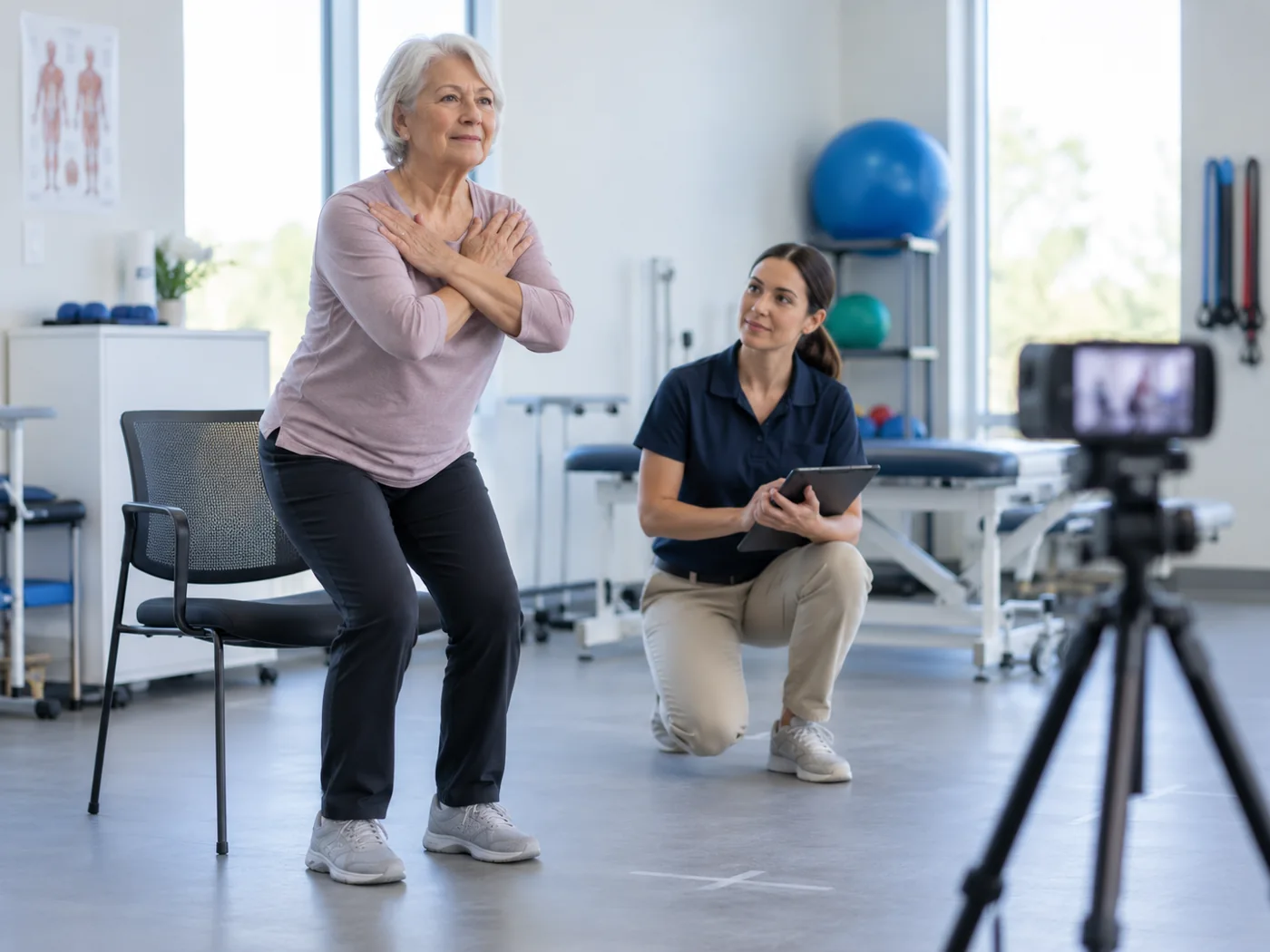
Physical TherapyObjective functional measures clinicians already recognize.

NeurologyRepeatable motor measurements beyond one observation.
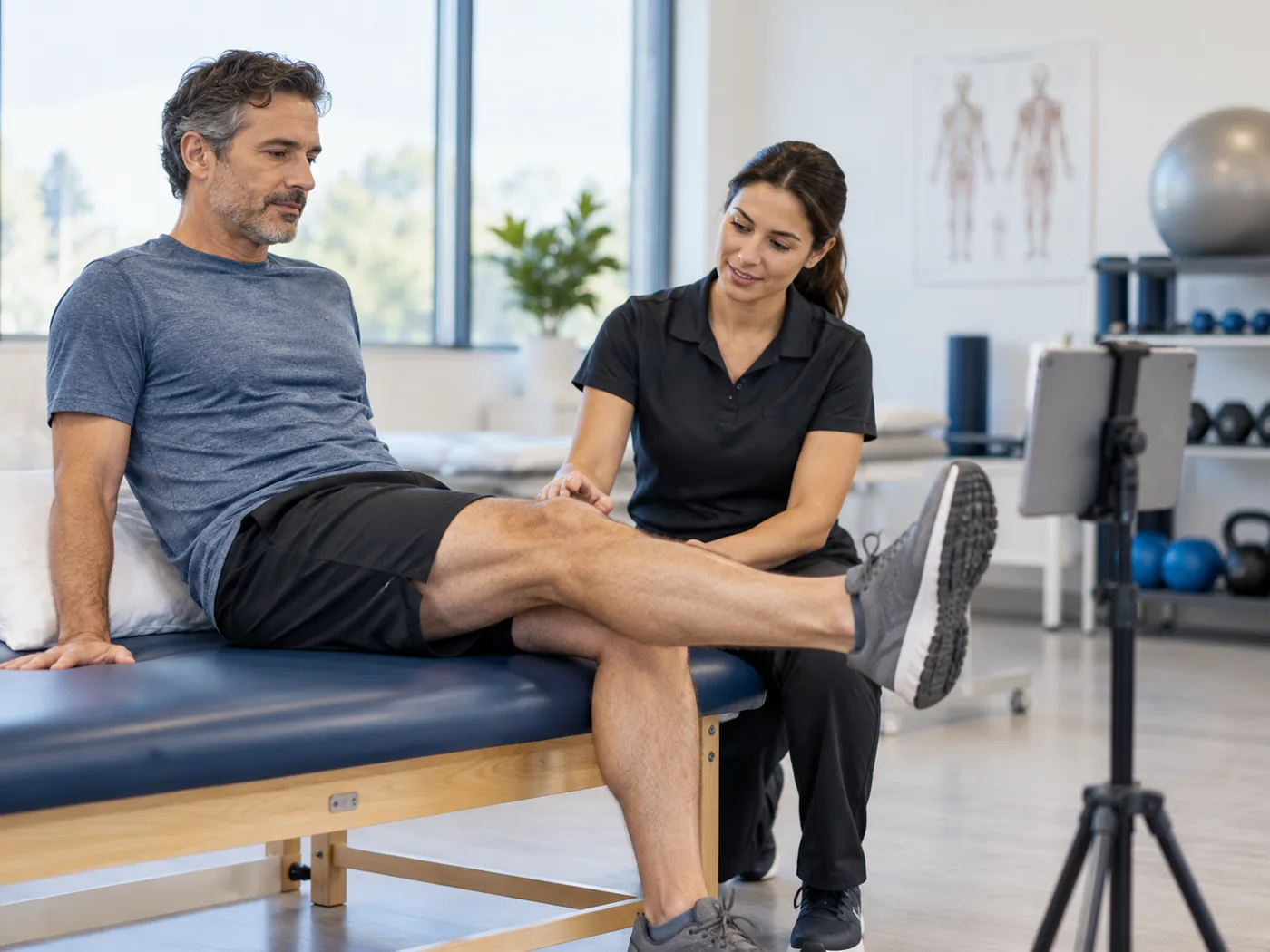
OrthopedicsPre- and postoperative function in measurable terms.
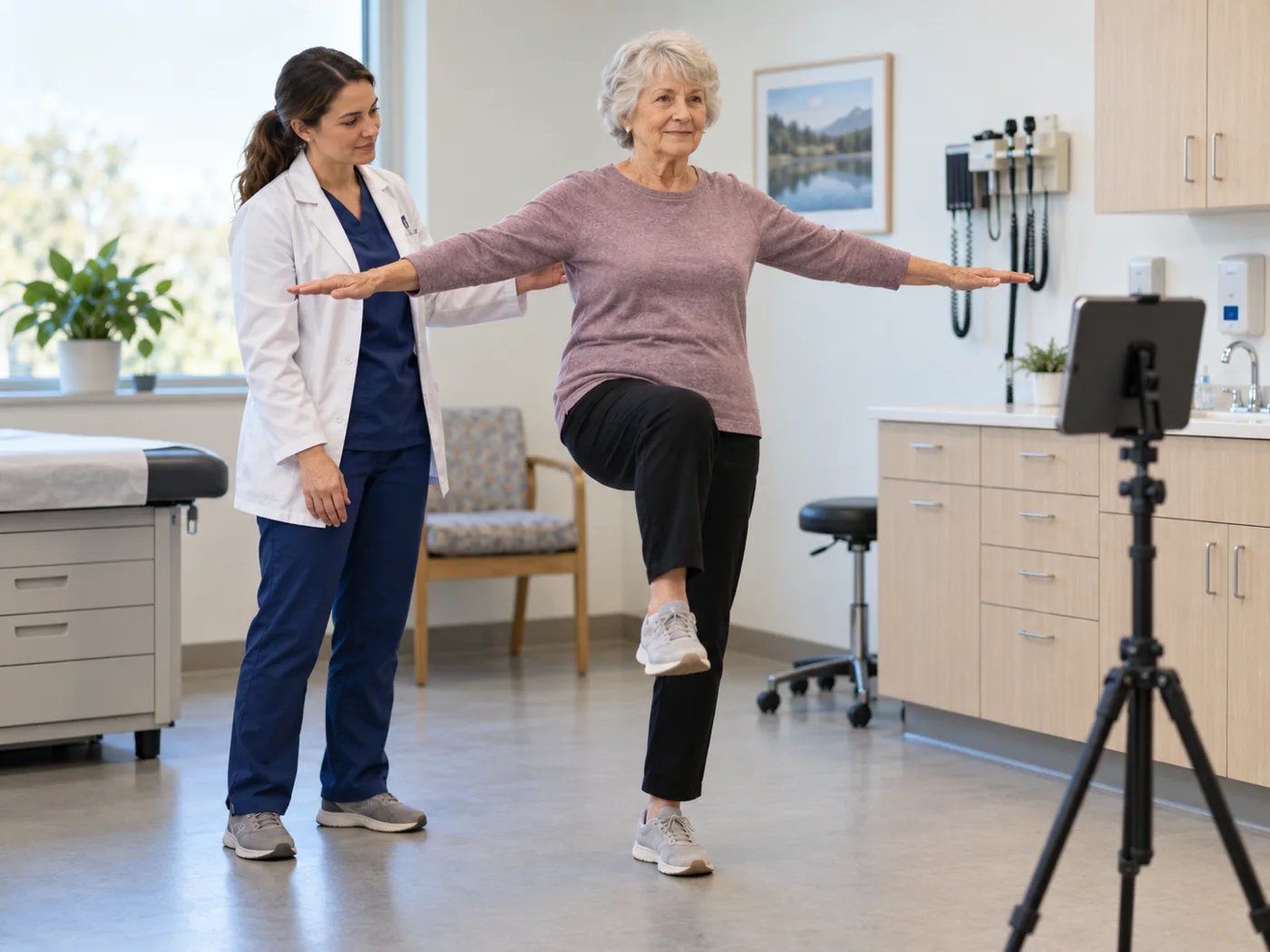
Geriatrics & Primary CareStandardized fall-risk and mobility assessments.
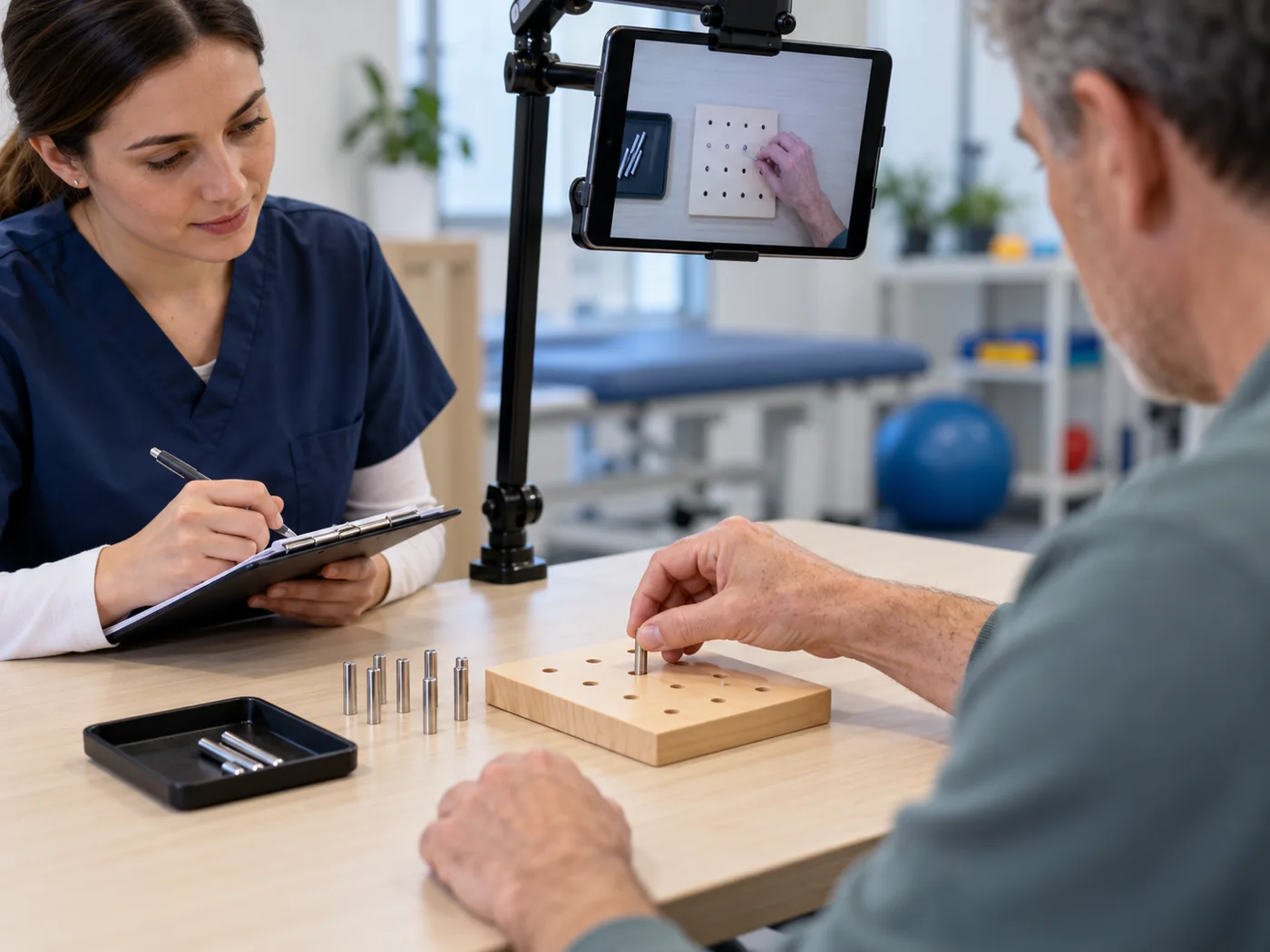
Occupational & Hand TherapyTurn standardized hand tasks into objective records.
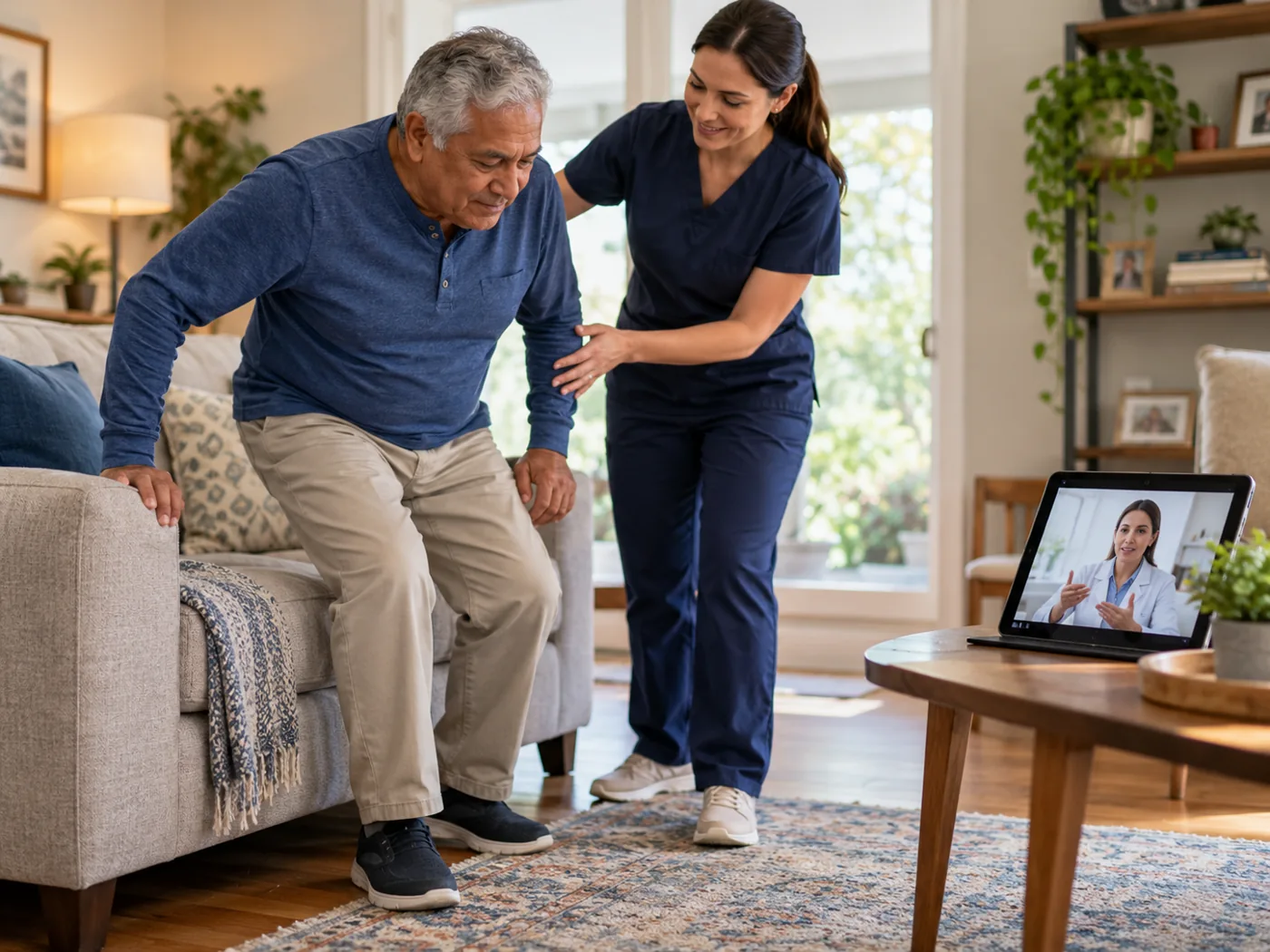
Home Health & Post-AcuteMovement evidence alongside functional independence documentation.
The MedMeters clinical test libraryReal clinical protocols.
Real clinical protocols.
One measurement library.
Explore research-ready protocol specifications with exact test procedures, camera measurements, validation questions and original clinical references. The wider library includes additional exploratory candidates.
A defined research roadmap
Specific protocols. Verifiable endpoints.
Published clinical tests first, MedMeters camera-capture specifications where no unified video standard exists. Every card links to the original reference and describes what we propose to validate.
Research candidates · No clinical measurements are currently being performed by this demonstration website.See the full assessment catalog ↘
Start here
Priority assessment families
Explore six high-relevance areas for early clinical discovery and protocol validation.
—Candidate tests & workflows
12Clinical assessment families
3Clinic & remote modes
1Consistent data model
All CV-relevant protocol volumes and time savings are modeled — not measured. We provide transparent base-case estimates for 82 camera-relevant assessments, drawing on APTA, BLS and CMS workforce or provider registries where available, plus explicitly assumed clinician participation and annual use. Neurology uses an assumed planning base. The questionnaire-only items are not CV assessments. Read all assumptions and sources ↗
Modes indicate potential workflows after safety assessment and validation, not universal permission to test at home. Standards are cited for reference; MedMeters does not claim clinical validation, FDA authorization, or affiliation with standards organizations. Patient questionnaires are not CV measurements.
Built for trusted measurement workflowsProtect at capture.
Protect at capture.
Compare across visits.
Two design commitments: reduce identifiable video before transfer when clinically feasible, and allow requested, like-for-like comparisons with previous assessments.
De-identify video as early as possible.
Design for on-device detection and redaction of faces and other visible identifiers before footage leaves the capture device, where the assessment allows it. Prefer derived motion data over retaining identifiable video.
Original capture
On device
On device
Redacted video
Or derived metrics
Or derived metrics
✓ Configurable face / identifier masking
✓ Protocol-specific privacy safeguards
✓ Minimal retention by design
Research: SecurePose validated automated face blurring on 116 clinical gait videos ↗
Blurring faces is not guaranteed anonymization: gait, body shape, voice, surroundings and metadata can still identify people. Facial neurology and some pediatric protocols may require different handling. HIPAA safeguards remain necessary.
Compare the same test over time.
When requested and authorized, align the current assessment with one or more previous sessions. Give clinicians a reviewable trend, then share an approved explanation with the patient.
Research: How clinicians can interpret meaningful change over time ↗
Example · Knee active flexion / 3 visits
95°Baseline
102°Visit 2
108°Visit 3
+13° from baseline · Numerical change only
✓ One prior visit or complete history
✓ Same-protocol comparability checks
✓ Clinician-facing and patient-facing views
Illustrative values. A numerical difference is not automatically a clinically meaningful improvement. Comparison depends on protocol, setup, uncertainty and clinician review.
Evidence-linked clinical reportsA measurement is a point.
A measurement is a point.
Progress is the story.
Compare the current test with one prior assessment or a longer history when requested. Keep protocol conditions, uncertainty and clinician review attached to every change — then make the approved trend understandable to patients.
Evidence context: Meaningful change is not the same as a numerical difference ↗
✓Protocol, body side, measurement unit, source video and capture conditions
✓Quality flags and repeatability checks, not false precision
✓Optional comparison with one or multiple earlier sessions, including clinician interpretation
✓Structured note draft, clinician sign-off and patient-readable summary
Assessment report / interactive sampleILLUSTRATIVE
Right knee flexion
Active ROM · two comparable visits
108°+13° from baseline
AssessmentKnee AROM · v1.0 (concept)
Data qualityPending clinician check
The recorded knee flexion increased from 95° to 108°. Your clinician should determine whether this difference is meaningful for your goals.
Values and charts are fabricated examples; no live camera analysis or patient records are connected.
Designed for existing clinical workflowsNot a new EHR.
Not a new EHR.
A measurement step inside yours.
The target design: launch an assessment in the software clinicians already use, capture only what the protocol needs, return reviewable measurements and patient progress without a second chart.
01 · ORDERStart from a patient encounter
Selected protocol, patient context and authorized clinician.
02 · CAPTUREClinic or guided home test
Camera positioning, safety criteria and local redaction options.
03 · MEASUREClinical endpoints + quality
Timing, angles, repetitions and protocol-specific quality flags.
04 · REVIEWCompare with baseline
One or multiple prior visits, checked for comparability.
05 · RETURNSave in the existing EHR
Draft observations, PDF and patient-facing summary after approval.
One patient record, less re-entry.
A physician or therapist stays in the familiar documentation workflow while MedMeters handles guided capture and draft measurements.
Comparable measures across visits.
Standardized protocols and metadata make trends reviewable across clinic and selected home settings.
An embeddable capability.
Start with a report, then progress to API callbacks, FHIR R4 mapping or white-label capture as an integration is validated.
For EHRs, digital care platforms & integratorsThe measurement layer
The measurement layer
your platform can own.
MedMeters is designed as a reusable measurement layer, not another medical record system. Healthcare vendors could embed guided capture, privacy controls, repeat-assessment comparisons and structured results into their existing workflows.
- Candidate REST API and SDK integration model
- FHIR-aligned measurements and report representations
- White-label possibilities for healthcare vendors
- Protocol-specific capture, redaction settings and quality metadata
- Optional longitudinal comparison across prior visits and settings
Integration examples describe proposed capabilities. No production API, Epic/InterSystems integration or partner certification is claimed.
medmeters / integration example
Concept schema only · Not a live API endpoint
One platform · many clinical settingsBuilt for the people
Built for the people
who measure recovery.
Start with movement and function. Extend the same measurement, reporting and interoperability layer to new clinical specialties as individual protocols are validated.
01.
Physical therapists & rehab clinics
Document joint ROM, sit-to-stand, gait speed and functional progress with reviewable data rather than manual transcription.
02.
Post-acute & home health
Support observation and structured evidence for mobility workflows while clinicians retain responsibility for Section GG scoring.
03.
Healthcare platforms
Add measurement capabilities to an existing EHR, patient portal or clinical software through a future SDK/API offering.
THE WORK BEHIND THE IDEA
MedMeters grew out of real-world projects. Years spent measuring movement.
From clinician-reviewed infant movement videos to multi-camera 3D reconstruction and remote body scanning, our work at Keepriot shaped how we think about clinical measurements: measurable, repeatable and reviewable.
Meet the team & explore our history Built in Cyprus · Concept in development
 01 / Clinical review02 / Movement measurement
SCANCHILD → FIGHT.VISION → MEDMETERS
First clinical design partnersCan we make a routine assessment
Explore the PT pilot Can we make a routine assessment
easier to document?
We are designing a focused pilot with outpatient PT clinics to validate scoring, time savings, repeated usage and the path to a paid workflow. No live clinical product is offered yet.
Frequently asked questionsGood measurements
Good measurements
start with good questions.
A transparent view of the proposed platform, what it could support and where professional judgment stays essential.
Is MedMeters currently a clinically validated product?
No. This website presents a product and protocol catalog under development. Clinical performance, intended use, regulatory pathway and scope of deployment must be validated before clinical use. Sample measurements are illustrative.
Can every test be done independently at home?
No. Home suitability varies by test, patient capability, assistive equipment, fall risk and environment. Some assessments require trained clinicians, spotting, marked distances or physical test equipment. The catalog shows possible future modes, not universal eligibility.
Does the camera replace clinical judgment?
No. Camera-derived outputs may support quantitative observation. The clinician reviews and interprets findings, determines the care plan and confirms official scores when required. A numerical change alone does not prove clinical improvement.
Can MedMeters connect to an existing EHR?
Our proposed architecture includes structured measurements, FHIR-aligned exchange and integration interfaces. These are product goals, not currently available connectors. We are interested in discussions with EHR vendors and integration partners.
Which assessments are you prioritizing first?
The initial research focus is knee and shoulder active ROM, Five Times Sit-to-Stand, 30-Second Chair Stand and Timed Up and Go. Further categories are candidates for future technical and clinical validation.
What about HIPAA and FDA?
Potential clinical software functions must be assessed under applicable FDA rules, and processing protected health information on behalf of US covered entities typically requires suitable HIPAA safeguards and agreements. We do not claim regulatory clearance or certifications for the concept shown here.