Privacy-first intake
Reduce identity exposure early.
Proposed on-device face and identifier redaction before cloud transfer, where clinically appropriate.
MedMeters is developing a privacy-first library of camera-assisted clinical assessments. Measure standardized functions, reduce identifiable video at intake where possible, and compare the same test across visits — in clinic or at home.
Proposed on-device face and identifier redaction before cloud transfer, where clinically appropriate.
Compare one or multiple previous tests when requested, with protocol and quality checks.
Built around the clinical test — not a generic motion score. The goal is to make results useful, reviewable and comparable wherever the assessment happens. What clinical validation research tells us ↗
Design for configurable face and identifier masking on the capture device, minimizing transfer of identifiable video where possible.
Defined camera positions, test conditions, units, measurement uncertainty and quality checks for each assessment.
Optional comparison against a previous visit or a complete series. Clinicians see what changed — and what is truly comparable.
Bring selected, clinician-assigned low-risk tests into guided home workflows without changing the underlying measurement model.
Designed for structured outputs and review workflows that healthcare platforms may embed through future API and FHIR integrations.
Published studies support the feasibility of camera-assisted measurement, guided remote testing and privacy-preserving video workflows. They do not validate MedMeters itself.
Automated scoring of clinical mobility tests is already supported by patient-level validation research.
Bertrand et al. · PLOS Digital Health · 2026 · Read analysis ↗MARKERLESS MOTION4.5°Modern smartphones can estimate clinically relevant movement features under controlled conditions.
Uhlrich et al. · PLOS Computational Biology · 2023 · Read analysis ↗PRIVACY & CLINICAL VIDEO91.08%Patient video can be redacted and processed for movement metrics within the same workflow.
Bajpai & Aravamuthan · Scientific Reports · 2026 · Read analysis ↗CLINIC-TO-HOME19 peopleRemote functional assessment is feasible for selected tests, but reliable capture needs guidance.
Fyfe et al. · PLOS ONE · 2025 · Read analysis ↗The same structured measurement can support a clinician's documentation and a patient's understanding of progress. Clinical decisions always remain with the care team.
Choose a recognized assessment with a specified setup, required equipment and safety considerations.
Guide the camera view, record movement and detect timing, repetitions or joint landmarks.
Show measurements with source video, quality checks and an editable clinician confirmation step.
Compare like-for-like sessions and prepare structured, reviewable clinical results for reporting.
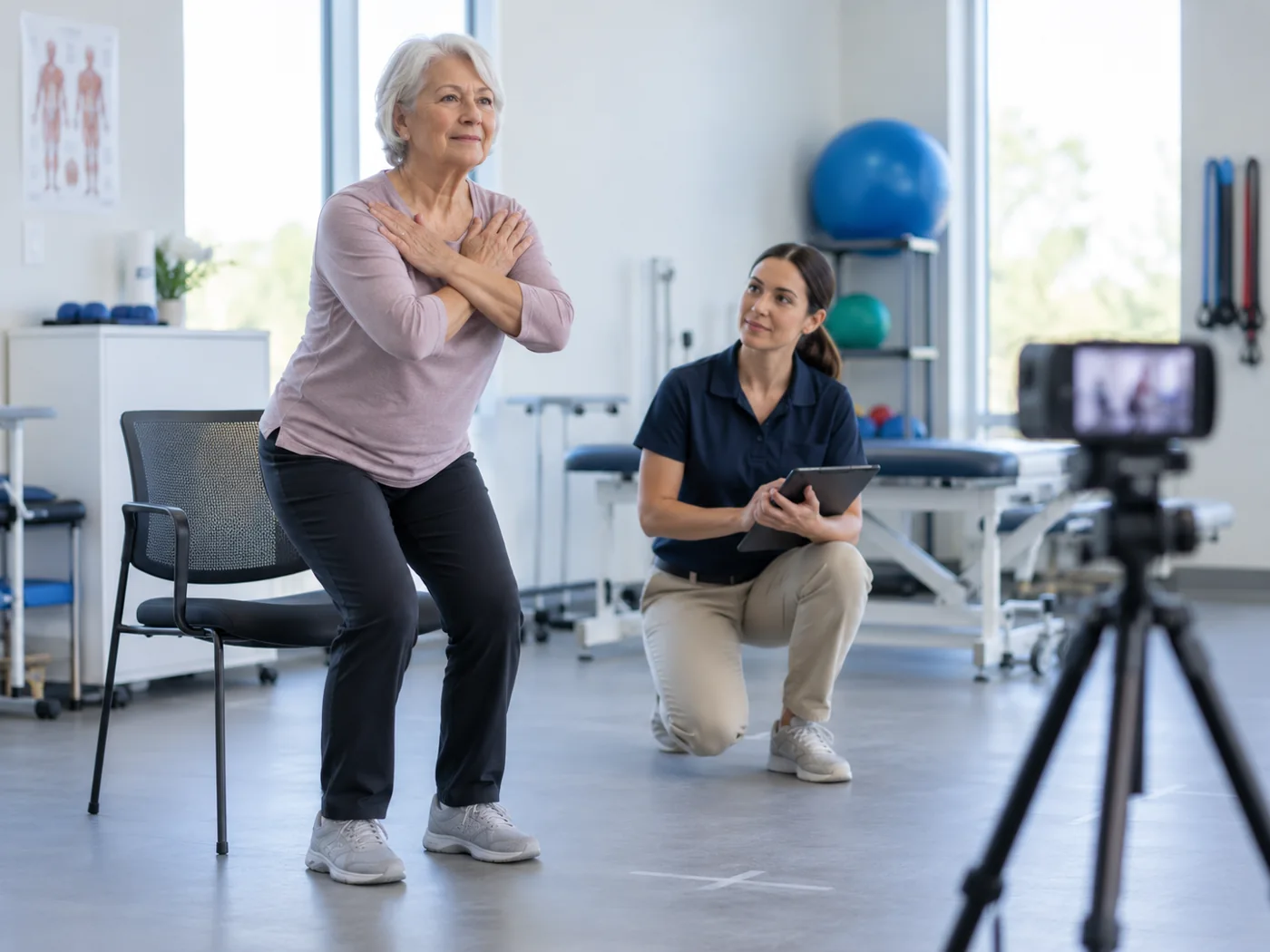 CDC STEADI · STANDARDIZED CLINICAL TEST
Using the CDC 30-Second Chair Stand, see how a clinician sets up a standard assessment, captures movements, verifies the count and compares repeat visits.
Results shown are illustrative. CDC requires a clinician next to the patient for safety; home use would require a separately evaluated adaptation.
Walk through the clinical test ↗One protocol model, adapted to the setting and clinician-approved safety requirements.
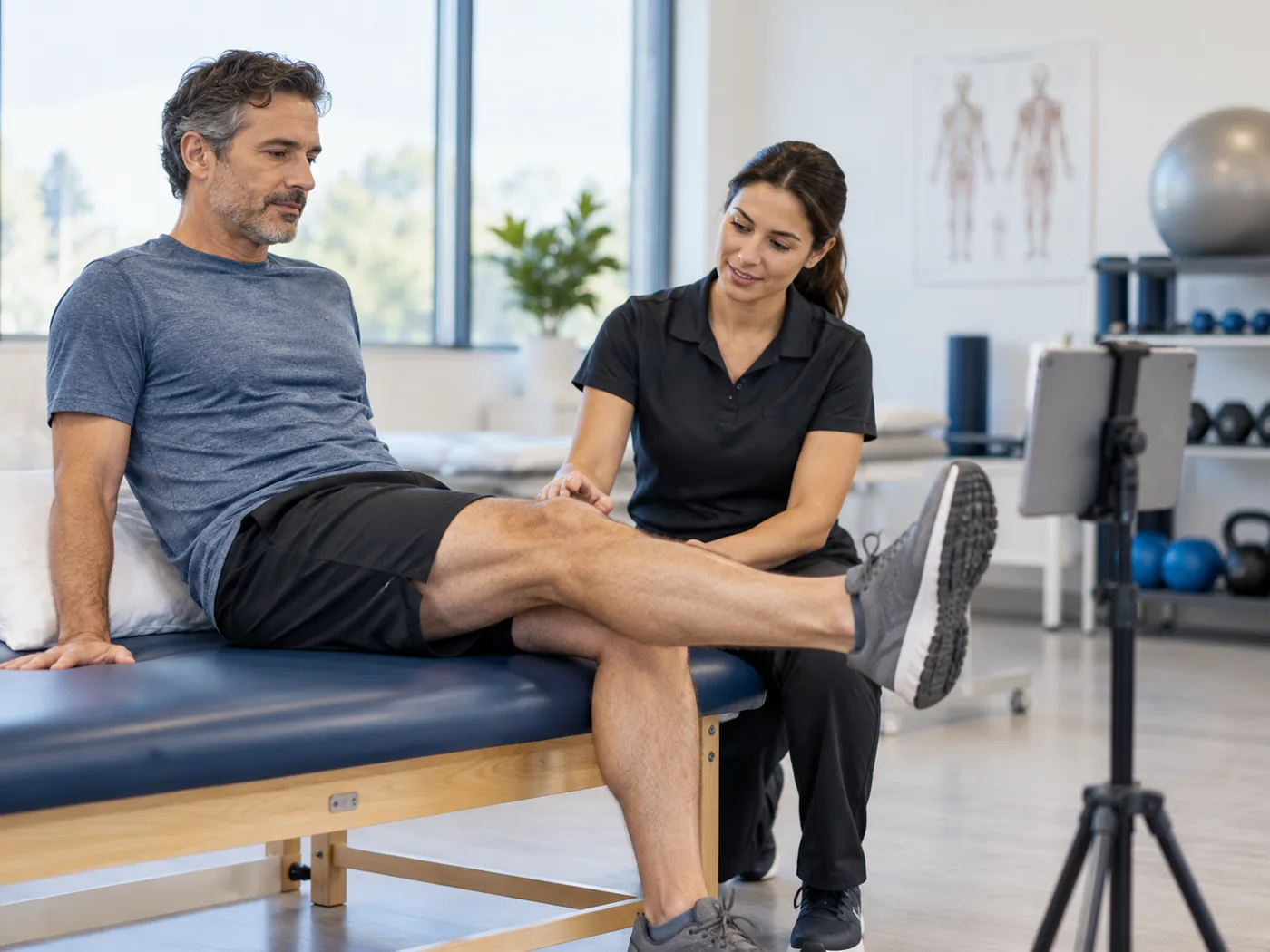
Guided capture, immediate review, traceable measurements and structured documentation in the clinician's workflow.
Clinician-led assessment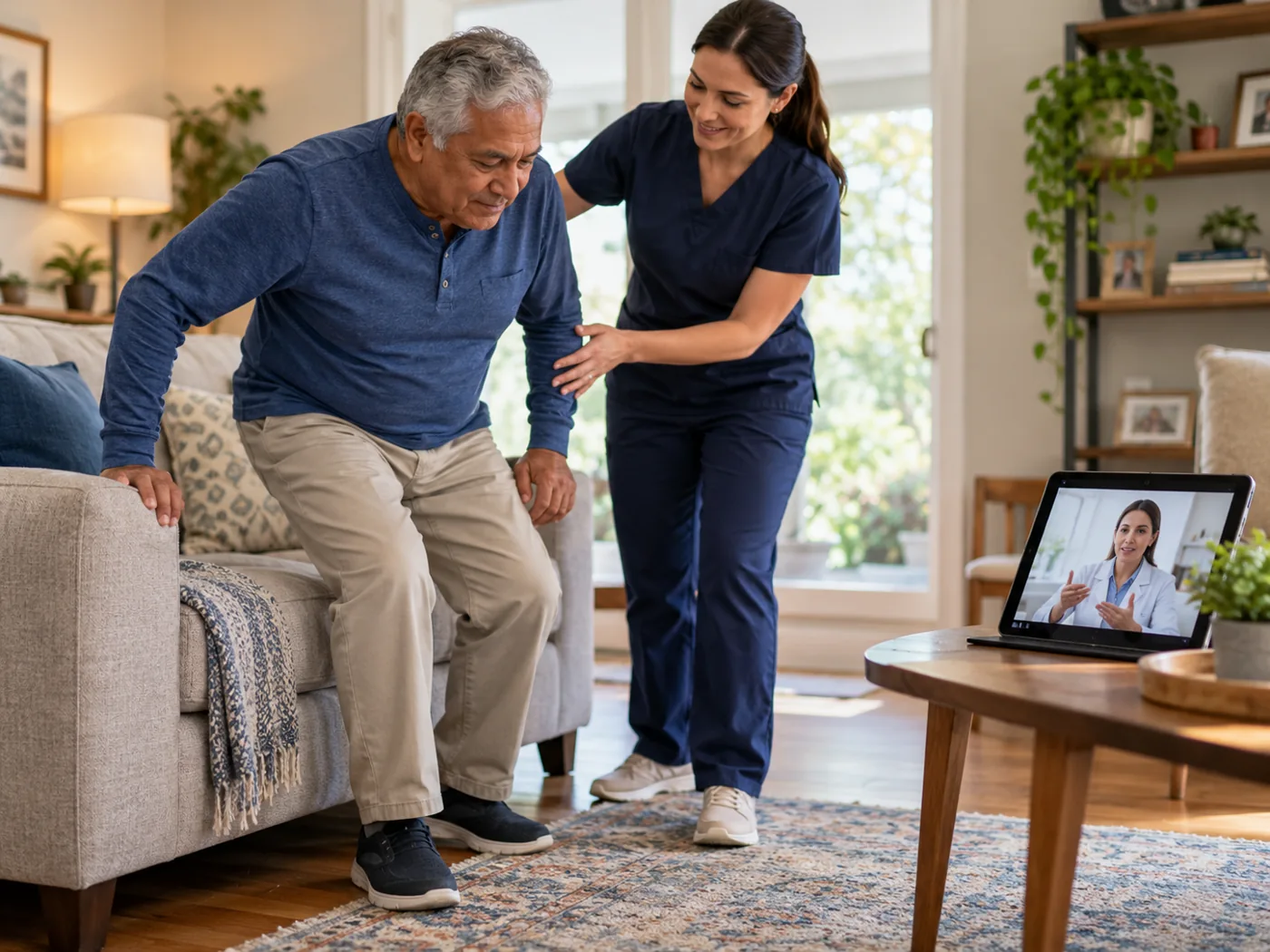
Eligible patients repeat assigned low-risk tests independently or with video guidance, with safety and quality gates.
Self-test or remote-guidedEvidence on home testing ↗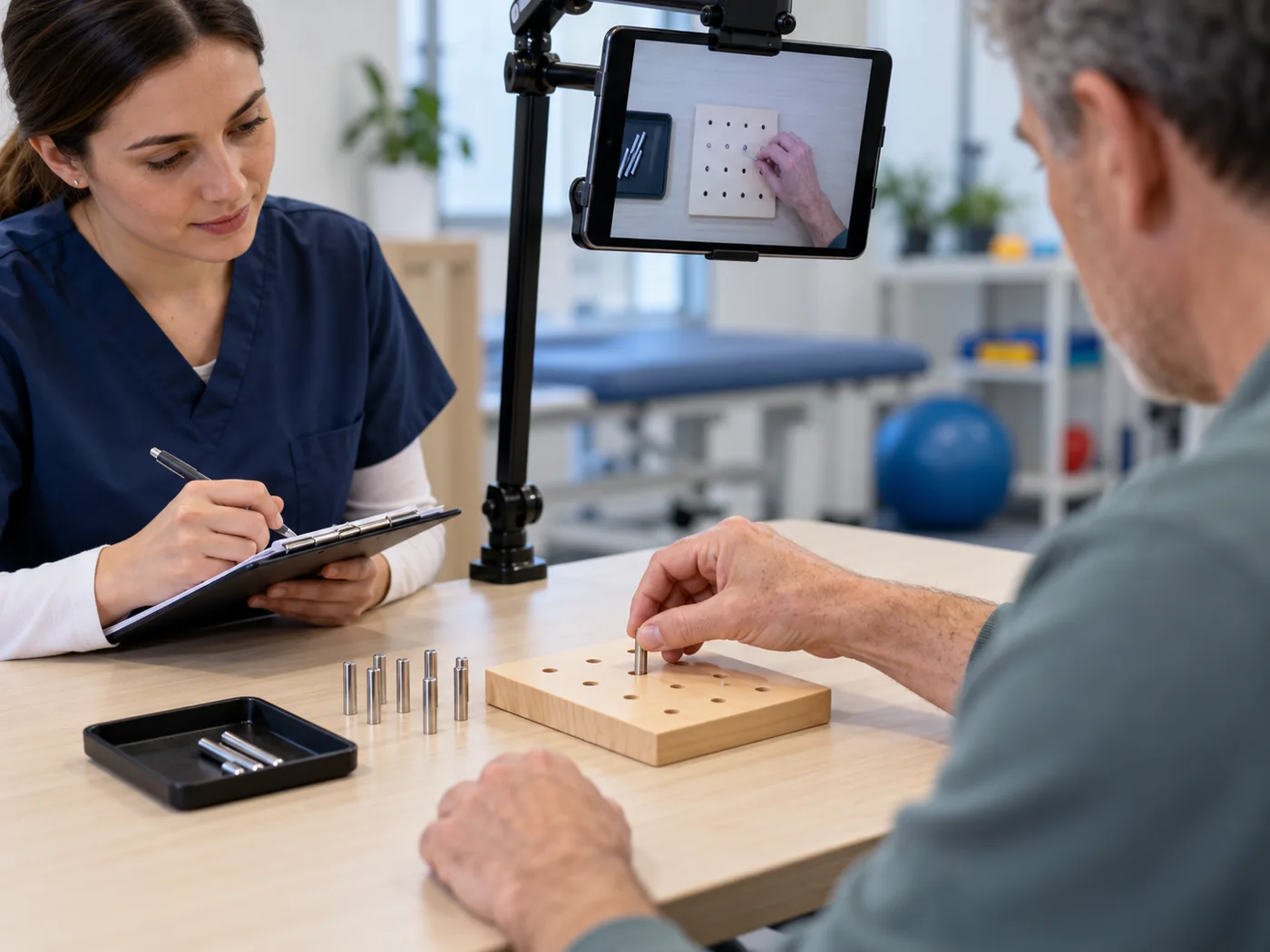
Proposed capture SDK and structured measurement outputs for EHRs, digital health services and care networks.
API / OEM integration conceptThe same standardized measurement platform can serve different clinical specialties — each with its own protocols, capture rules and validation.

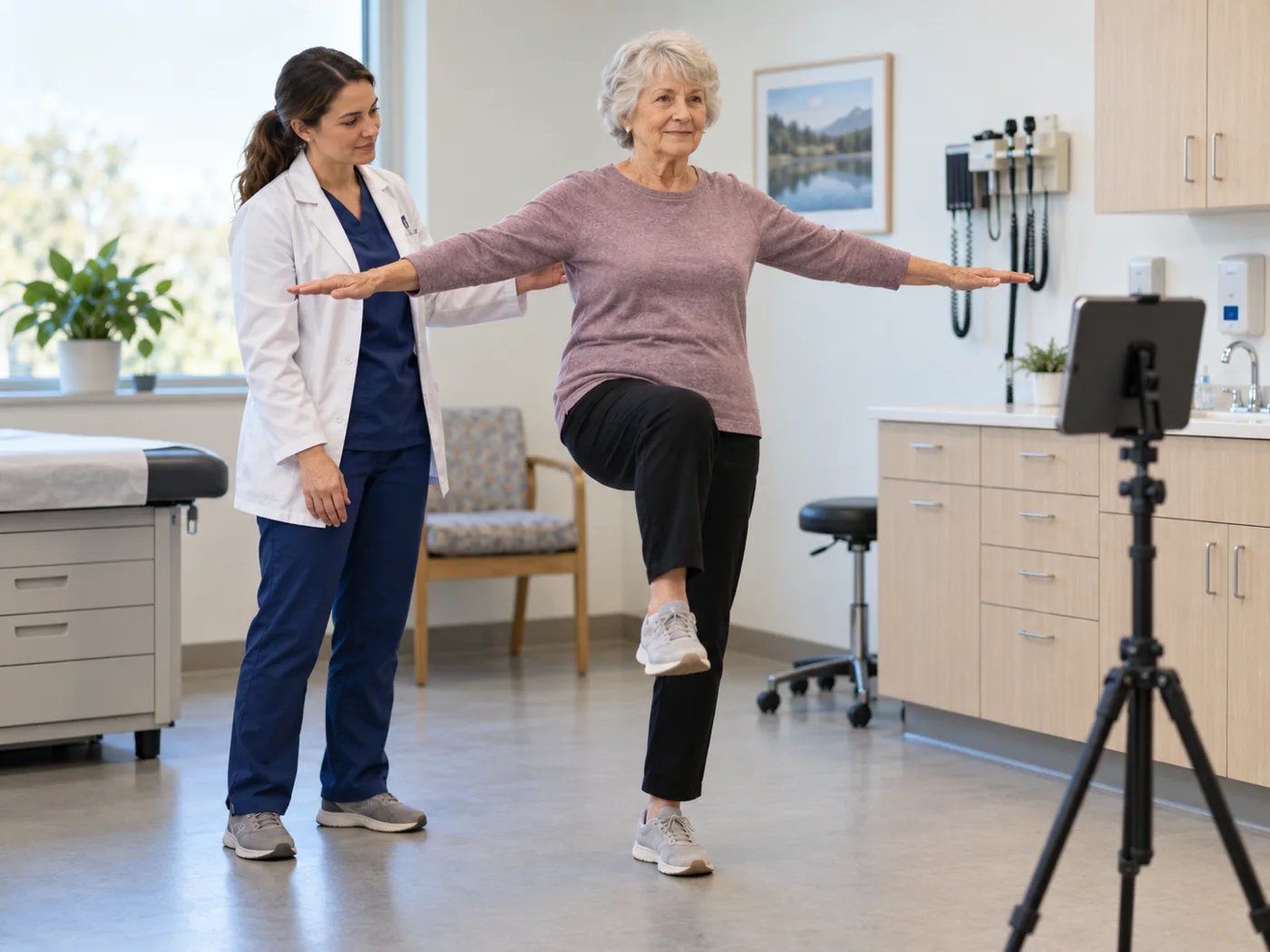
Explore research-ready protocol specifications with exact test procedures, camera measurements, validation questions and original clinical references. The wider library includes additional exploratory candidates.
Published clinical tests first, MedMeters camera-capture specifications where no unified video standard exists. Every card links to the original reference and describes what we propose to validate.
Explore six high-relevance areas for early clinical discovery and protocol validation.
Two design commitments: reduce identifiable video before transfer when clinically feasible, and allow requested, like-for-like comparisons with previous assessments.
Design for on-device detection and redaction of faces and other visible identifiers before footage leaves the capture device, where the assessment allows it. Prefer derived motion data over retaining identifiable video.
Research: SecurePose validated automated face blurring on 116 clinical gait videos ↗
When requested and authorized, align the current assessment with one or more previous sessions. Give clinicians a reviewable trend, then share an approved explanation with the patient.
Research: How clinicians can interpret meaningful change over time ↗
Compare the current test with one prior assessment or a longer history when requested. Keep protocol conditions, uncertainty and clinician review attached to every change — then make the approved trend understandable to patients.
Evidence context: Meaningful change is not the same as a numerical difference ↗
Active ROM · two comparable visits
Values and charts are fabricated examples; no live camera analysis or patient records are connected.
The target design: launch an assessment in the software clinicians already use, capture only what the protocol needs, return reviewable measurements and patient progress without a second chart.
Selected protocol, patient context and authorized clinician.
Camera positioning, safety criteria and local redaction options.
Timing, angles, repetitions and protocol-specific quality flags.
One or multiple prior visits, checked for comparability.
Draft observations, PDF and patient-facing summary after approval.
A physician or therapist stays in the familiar documentation workflow while MedMeters handles guided capture and draft measurements.
Standardized protocols and metadata make trends reviewable across clinic and selected home settings.
Start with a report, then progress to API callbacks, FHIR R4 mapping or white-label capture as an integration is validated.
MedMeters is designed as a reusable measurement layer, not another medical record system. Healthcare vendors could embed guided capture, privacy controls, repeat-assessment comparisons and structured results into their existing workflows.
Integration examples describe proposed capabilities. No production API, Epic/InterSystems integration or partner certification is claimed.
Start with movement and function. Extend the same measurement, reporting and interoperability layer to new clinical specialties as individual protocols are validated.
Document joint ROM, sit-to-stand, gait speed and functional progress with reviewable data rather than manual transcription.
Support observation and structured evidence for mobility workflows while clinicians retain responsibility for Section GG scoring.
Add measurement capabilities to an existing EHR, patient portal or clinical software through a future SDK/API offering.
From clinician-reviewed infant movement videos to multi-camera 3D reconstruction and remote body scanning, our work at Keepriot shaped how we think about clinical measurements: measurable, repeatable and reviewable.
 01 / Clinical review02 / Movement measurement
We are looking for clinical design partners and healthcare software teams to shape privacy-first capture, validated protocols and longitudinal reporting. No live clinical product is offered yet.
A transparent view of the proposed platform, what it could support and where professional judgment stays essential.
No. This website presents a product and protocol catalog under development. Clinical performance, intended use, regulatory pathway and scope of deployment must be validated before clinical use. Sample measurements are illustrative.
No. Home suitability varies by test, patient capability, assistive equipment, fall risk and environment. Some assessments require trained clinicians, spotting, marked distances or physical test equipment. The catalog shows possible future modes, not universal eligibility.
No. Camera-derived outputs may support quantitative observation. The clinician reviews and interprets findings, determines the care plan and confirms official scores when required. A numerical change alone does not prove clinical improvement.
Our proposed architecture includes structured measurements, FHIR-aligned exchange and integration interfaces. These are product goals, not currently available connectors. We are interested in discussions with EHR vendors and integration partners.
The initial research focus is knee and shoulder active ROM, Five Times Sit-to-Stand, 30-Second Chair Stand and Timed Up and Go. Further categories are candidates for future technical and clinical validation.
Potential clinical software functions must be assessed under applicable FDA rules, and processing protected health information on behalf of US covered entities typically requires suitable HIPAA safeguards and agreements. We do not claim regulatory clearance or certifications for the concept shown here.
Tell us what you're exploring. The button opens a draft in your email app — this static website does not collect or store submissions.