Measure and review
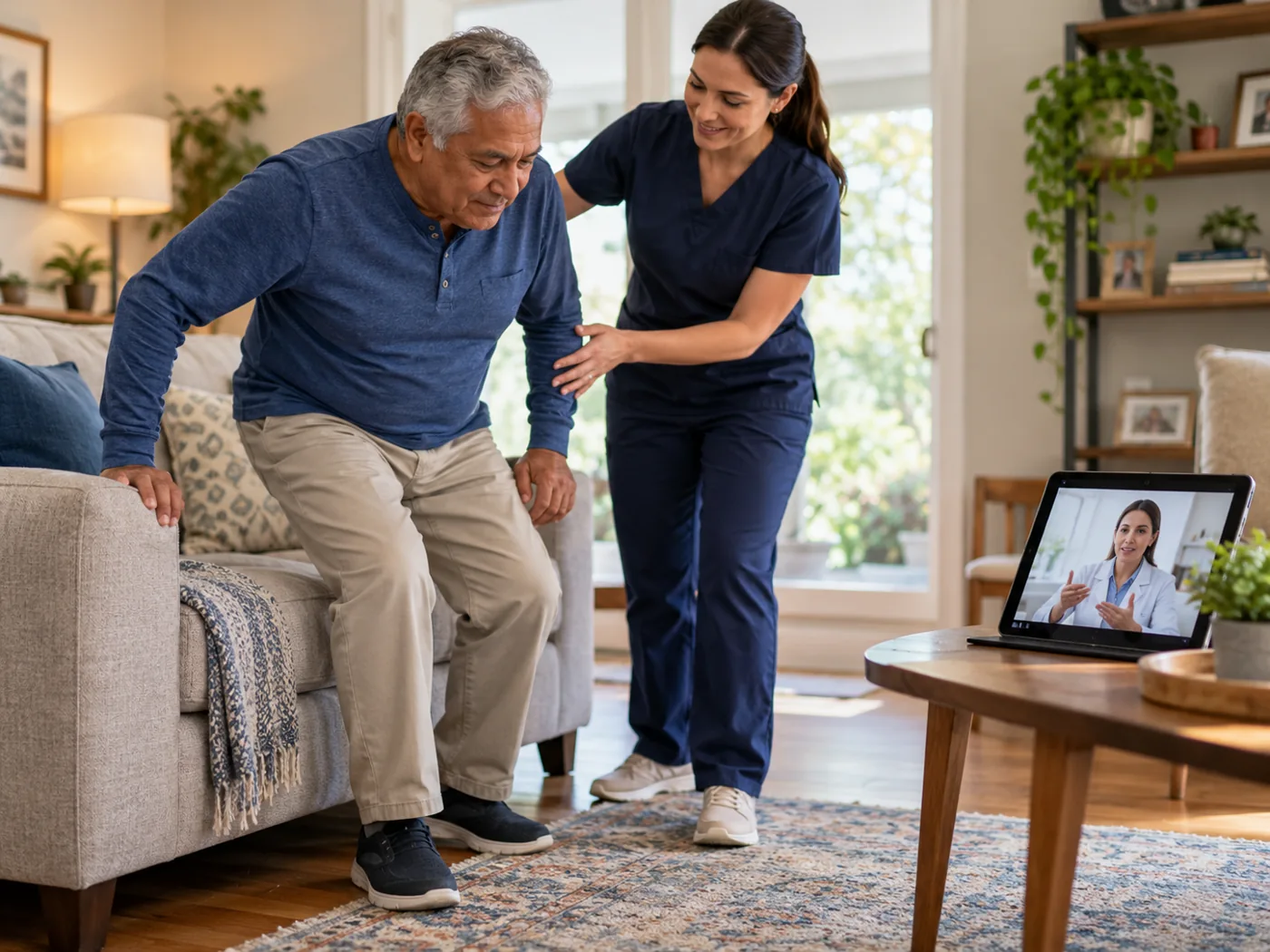
Capture a clinician-led functional task → retain supporting evidence and observed facts → clinician assigns appropriate Section GG assistance score.
Medicare post-acute workflows use structured functional assessment items. Video can help document observable task performance, but the clinician must determine the level of assistance required.
Product concept and validation roadmap. No MedMeters measurements are clinically available yet.
SNF · Inpatient rehab · Home health agencies. The exact protocol, test equipment and camera requirements matter more than a generic AI movement score.
These are established tests or clinical measurement methods, not a claim that all are currently fully automatable from a single RGB camera.
| Assessment | Source / framework | Potential measurement | Suitable context |
|---|---|---|---|
| Sit-to-stand transfer | CMS Section GG mobility item | Task completion, time, observed assistance | Clinician-led |
| Chair / bed transfer | CMS Section GG mobility item | Observable stages and support context | Supervised |
| Walk 10 feet | CMS Section GG mobility item | Completion of marked distance | Clinician-led |
| Walk 50 feet with two turns | CMS Section GG mobility item | Walking + turning events | Clinic or eligible home care |
| Five Times Sit-to-Stand | Standard functional test | Elapsed time across five stands | Selected rehabilitation visits |
Capture a clinician-led functional task → retain supporting evidence and observed facts → clinician assigns appropriate Section GG assistance score.
Video alone cannot determine the standardized Section GG score. Some transfers require physical support, not just a remote observer.
The software must reject poor-quality captures. Repeated tests should be compared only when protocol version, equipment, assistance and camera conditions are compatible.
Clinic app, selected guided-home follow-up or a healthcare-platform API — all designed around clinician-confirmed measurements and explicit quality metadata.